Posts

Showing posts with the label hackers

Google Translate A New Tool For hackers to Steal Your Data

Image
With the advancement in technology where digital privacy is turning out to be a false notion, hackers are ranging over ingenious ideas to intrude in to user’s accounts & steal their private data. We all are well acquainted with spam mails that carry malevolent content. A mere click on these phishing scam e-mails can open up sensitive information of the users to the hackers. But now the users need to stay vigilant against the new phishing tools for hackers, the  Google Translate phishing hack . The New Phishing Tool: Google Translate A recent report by ZDNet revealed that Google Translate is the new tool in the hands of the hackers to  phish into user’s accounts &  steal sensitive information . Though the information is hard for many of the users to digest, the hackers are furtively using a flaw created in Google Translate & there are positives that the users might fall in to the trap! According to the report, the hackers are targeting phishing at...

Dell Systems under Radar of Information Stealers

Image
Technological advancements have made the world a great and convenient place to live in.  There is no denying the fact of how the evolution of technology has made our lives easier. Today’s world is to a great extent shaped by innovations made possible by computer science. The incredible speed, accuracy & storage offered by computers have human life faster and efficient. The present global age is the consequence of the computer age. However, too much reliability on computers is the major downside of this empowering invention. The world today is experiencing a global change in the way people live and their lifestyles. Dependence on computers for everything has led to a drastic decline in the ability of a person to think, make decisions, their reasoning abilities & memory. Over the past decade, the web has been embraced by millions of businesses as an inexpensive channel to communicate and exchange information with prospects and transactions with customers. No wonder we...

Instagram Phishing Scam

Image
Instagram, the second most preferred social media platform among millennial has now caught the eyes of threat actors.   A recent string of Instagram Phishing Scam have terrorized Instagram users wherein cyber-maniacs target popular influencers – with over 100,000 followers. What is it about this app that makes it so wildly successful? Instagram is a popular social networking service owned by FaceBook where people share photos, videos etc.  As social media sites have grown in numbers by leaps and bounds, the following features give this online global network an edge over other social media platforms: The clever design choices, Implementation of fine filters to edit the pictures, Provision to tag people who hold an account on Instagram, Provide location information, People’s desire to connect to a growing revenue stream is met by Instagram better than any other social media platform. The popularity of Instagram has made it a prominent target in the cyber-cr...

Two-factor authentication: A Safeguard to Account Login

Image
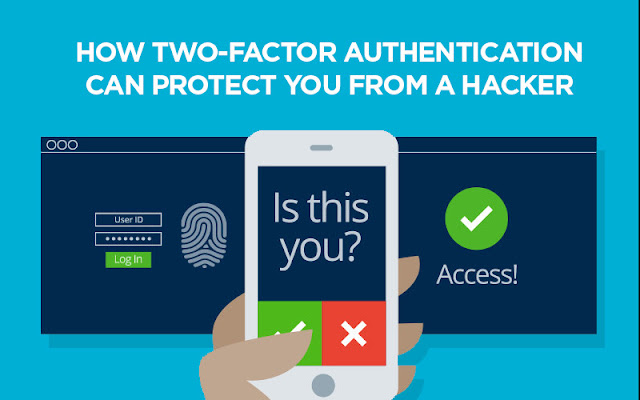
Users who rely on two-factor authentication via SMS and consider it as a safeguard for account login are in a fix. Cyber miscreants are embarking on new tactics to swindle users. The second layer of authentication implemented on applications to keep accounts protected usually involves a code sent on the mobile devices via SMS. However threat actors have devised decisive tactics to acquire the code sent on the mobile phones and hence gain unauthorized access to your device or application. These tactics include: Intercepting unencrypted messages sent over a network: Attackers leveraged this ingenious technique to target German Bank Accounts last year. Threat actors exploited the vulnerability in the signaling network of telecom operators to redirect calls and text messages. Hence, users attempting to login to their bank accounts waiting to receive a code via a text message were deceived. The text message containing the code were re-routed to hackers that enabled them access user’...

Department of Homeland Security USA Warns ERP Giants of Impeding Cyber Attack

US Department of Homeland Security (DHS) warns users against ERP Attack Department of Homeland Security of America has warned users against impending cyber attacks on ERP (Enterprise Resource Planning) systems. Homeland security  is a US based national security that ensures that the area of the country within the national boundary is safe, secure and resilient against terror attacks. The basis of this warning is the report published by Threat Intelligence firms that depicts that there has been a sudden surge in the interest of the hackers to target ERP systems who may use both hacking and DDoS (Distributed denial of Service) attacks to carry out disruption and compromise these high-value assets. Attacks of this nature were first warned in May 2016 when the exploitation on 36 global organizational institutions was suspected through the abuse of the seven year old vulnerability in SAP applications. What is ERP? Why cyber criminals target ERP systems? ERP (Enterpris...

Fraud & Cloned websites using fake loan domain name to trick users!

Image
Humans have infinite desires. To fulfill those desires people take loans from friends and relatives. Once that door closes, they approach banks for loans. Official Online websites of banks and financial services state their terms and conditions for the loans they offer. These websites also caution the users to be aware of scams and frauds. There is an increasing amount of online banking fraud and scams with latest technological advancements. Read more how the fake loan domain name phishing is done by online scammers. Users are often sent emails that are made to look like a legitimate communication from the bank. The users are then asked to fill in their details for KYC or other purposes. The email contains a link, which takes them directly to the website from their email to fill in those details. Once the user opens the link, a website which is an exact copy of the original website of the bank gets displayed to the user. The user fills in the details containing usernames, password...